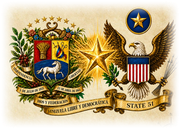
How is it carried out, vote by vote, in thirty-six months?
The transition as a timeline and as a map of actors: who has to do what, in what order, and what makes it fail.
The essentials
As a sovereign republic. The transition requires three distinct legal instruments, each with a precise function. The correct political rule is simple: a short decree to save the day, a framework law to order the process, a limited enabling law to execute fast, the Assembly to legitimize and oversee, and a referendum for what is structural and irreversible.
In the first seventy-two hours, the government must secure the chain of command, protect critical infrastructure, safeguard archives, freeze irreversible acts, provisionally replace captured nodes, and open the national transition transparency portal. In the first thirty days, it must present the mother legislative package, activate the vetting of officials, asset recovery, and initial digitalization, and open the extraordinary registry for the diaspora and nationality.
As the 51st State. The right thing is to sequence consent. The important thing is that the country not decide blindly. First it authorizes discussion. Then it compares models with real data. In the end it ratifies a concrete text.
Venezuelan referendums with their thresholds (the decision of the original sovereign), the Enabling Act of Congress (the federal door opens), the state constituent convention and popular ratification of its text (the new pact is written and voted), the Admission Act (the door is crossed). Four stations, each with its guardian, each with its vote.
From the book The 51st State, Parts VI and VIII.
The sources
- Constitution of the United States, Article IV, Section 3, Clause 1. Constitution Annotated, Congress.gov constitution.congress.gov (accessed September 23, 2026) · archived copy
- Congressional Research Service, Admission of States to the Union: A Historical Reference Guide (R47747) everycrsreport.com (accessed September 23, 2026) · archived copy
- U.S. Senate Committee on Foreign Relations, hearing “U.S. Policy Towards Venezuela,” January 28, 2026, testimony of Secretary of State Marco Rubio foreign.senate.gov (accessed October 2, 2026) · archived copy
- Referendums in Montenegro (2006), the United Kingdom (2016), Quebec (1995), and Scotland (2014): European Commission and Council of the EU, Electoral Commission, Élections Québec.
- The 51st State, Parts VI and VIII and Appendix IV.
Developed in Volume 02 of the series: If the country takes that route, how is it carried out, vote by vote, in thirty-six months?