
Skip to content
The 51st State
ES / EN
Start here

What is the 51st State?

Full incorporation into the Union, with citizenship and representation, as the architecture of maximum irreversibility, executable only by Venezuelan decision in referendums.

01 · The proposal

Three paths on the table

That decision belongs to the people of Venezuela and to the United States Congress. What a book can do is see that it is made with the information on the table.

I

A Free and Democratic Venezuela


The country recovers its institutions and governs itself, with a strategic alliance with the United States but without ceding sovereignty. It is the first aspiration and the one with the greatest historical legitimacy; its risk is relapse, and that is why it is only worth having if it is born irreversible.
II

Supervised Territoriality


A structural association of transition that provides superior legal frameworks in exchange for sovereignty restricted for a time. It can serve as a bridge, but it threatens to freeze into limbo; that is why the book admits it as a step, never as a destination.

III

The 51st State


Full incorporation into the Union, with citizenship and representation, as the architecture of maximum irreversibility, executable only by Venezuelan decision in referendums.

RuleEvery design is presented in both versions: one for a sovereign republic and one for the 51st State.

How a state is admitted, and the precedents

Start here

What we know so far

  1. On January 3, 2026, U.S. forces captured Nicolás Maduro, and Delcy Rodríguez became interim president.FOX 13 (archived copy) · La Nación (AFP) (archived copy)
  2. Since March 2026, Donald Trump has floated the idea of Venezuela as the 51st state several times: on Truth Social, on Fox News, and with maps posted in May and in August.Forbes (archived copy) · Infobae (archived copy)
  3. On May 11, 2026, Delcy Rodríguez rejected the idea: “That would never be contemplated.”La Nación (AFP) (archived copy)
  4. Under the U.S. Constitution, the power to admit new states belongs to Congress, which does so by passing a law by simple majority in both houses. In the Senate, if the bill is filibustered, ending debate to reach that vote takes 60 of the 100 senators.Constitution, Art. IV, Sec. 3 (archived copy) · CRS R47747 (archived copy) · U.S. Senate (archived copy)
Read it in full →
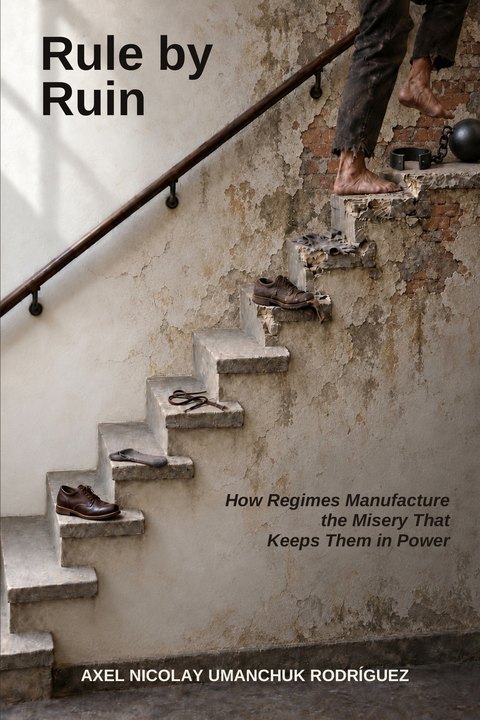
Cover of Rule by Ruin: How Regimes Manufacture the Misery That Keeps Them in Power
Related reading

Rule by Ruin

How Regimes Manufacture the Misery That Keeps Them in Power

A state does not always decay through incompetence. At a certain point, decay stops being the failure of power and becomes its tool, and a people that cannot recognize it mistakes it for bad luck. This book documents the mechanism piece by piece, with four cases told in full: Nazi Germany, Cuba, Zimbabwe, and Venezuela. It is written for those whose country has not yet fallen: the citizens of a country where people say, “That can’t happen here.”

Also in Spanish: Control por deterioro